Abstract: In response to the demand for tungsten shielding materials in the nuclear energy sector and the performance requirements for powders imposed by 3D printing technology, radio-frequency plasma spheronization was employed to spheronize irregularly shaped tungsten-based powders. By investigating the effects of process parameters—such as nitrogen flow rate, feed speed, and shielding gas flow rate—on the bulk density, oxygen content, flowability, and particle size distribution of the spheronized tungsten powder, optimal spheronization parameters were determined. The microstructure and composition of the spheronized tungsten-based powder were analyzed using a scanning electron microscope (SEM) and an energy dispersive X-ray spectrometer (EDS). The results indicate that the optimal spheronization parameters for the tungsten-based powder are a nitrogen flow rate of 10 L/h, a shielding gas flow rate of 20 L/h, a plasma flow rate of 4 L/h, and a feed speed of 1.35 r/min; the powder spheronization degree is close to 100%, and the distribution is uniform. Ultimately, the tungsten-nickel alloy shielding body fabricated via 3D printing using spherical tungsten-nickel powder was found to be crack-free, with a porosity of less than 1% and a relative density greater than 99%.
0 Introduction
With the continuous advancement of nuclear power technology, the demand for highly efficient and environmentally friendly radiation shielding materials in the nuclear power industry is growing. Although traditional lead shielding materials have been widely used in the nuclear power sector due to their low cost, good shielding performance, and ease of installation and maintenance, they are soft and prone to deformation, and they possess biological toxicity. Consequently, their use is gradually being restricted; particularly in the naval sector, traditional lead shielding materials are in the process of being phased out [1,2].
High-atomic-number, high-density metallic elements provide effective shielding against Y-rays; therefore, heavy metals such as lead and tungsten are commonly used in the manufacture of radiation shielding materials. Compared to lead, tungsten has a density 1.7 times that of lead and exhibits greater hardness, making it a promising candidate for structural materials. Research by Japanese scholars has found that tungsten provides better shielding against Y-rays than lead and is the most promising alternative to lead for radiation shielding materials [3–5].
The traditional method for preparing radiation shielding materials involves mixing shielding materials—such as tungsten powder and lead powder—with binders like epoxy resin to form a radiation-shielding coating. However, the upper limit on the density of heavy metals restricts the effective shielding volume of the material, thereby reducing its shielding effectiveness. Furthermore, the binder is prone to aging when exposed to radiation, shortening its service life and making it difficult to ensure the stability of the radiation shielding performance [6]. Due to tungsten’s high hardness and high melting point, researchers both domestically and internationally primarily employ processes such as sintering [7,8], plasma spraying [9,10], and selective laser melting [11,12] to fabricate tungsten shielding bodies. When using the sintering process, tungsten particles are prone to excessive grain growth, which affects material performance; therefore, elements such as Ni and Fe are typically added to improve the uniformity and density of the sintered alloy. When using the plasma spraying process, the preparation is relatively difficult because the thickness of the tungsten-based alloy coatings produced by this method is limited, and cracking and spalling are common; 3D printing technology, primarily based on selective laser melting (SLM), uses a laser as a heat source to melt metal powders and can produce parts with complex dimensions and structures; consequently, it has gradually become a hot topic in research on manufacturing processes for tungsten-based shielding bodies.
Tungsten-based powders prepared using traditional mechanical comminution, physicochemical methods, and agglomeration-sintering methods suffer from issues such as irregular morphology and poor flowability, making it difficult to meet the powder performance requirements of 3D printing technology. Consequently, researchers and engineers both domestically and internationally have explored and developed various methods for producing spherical tungsten powder, such as the rotating electrode method and spray granulation. However, these methods all suffer from drawbacks including stringent processing conditions, complex procedures, non-uniform particle morphology, and poor flowability [13,14]. Radio-frequency plasma powder spheronization technology is a novel powder material processing technique. This technology leverages the high energy density and intense heating capacity of thermal plasma to rapidly heat irregularly shaped powders injected into the plasma until they melt. Under the influence of extreme temperature gradients and surface tension, the molten particles form spherical droplets, which condense within a very short time into powder particles with excellent sphericity. Compared with traditional powder spheronization methods, powder products prepared using the radio-frequency plasma method exhibit higher sphericity, better surface finish, and greater purity, and offer distinct advantages in the preparation of spheronized powders from refractory metals [15,16].
This paper employs radio-frequency plasma powder spheroidization technology to prepare spheroidized tungsten-based powders. By investigating the effects of factors such as nitrogen flow rate, feed speed, and shielding gas flow rate on the plasma spheroidization process, the optimal process parameters were determined. Subsequently, 3D printing experiments using the tungsten powder were conducted to fabricate and analyze shielding structures.
1. Materials and Methods
1.1 Test Materials
The powdered raw materials used in this experiment were ZW200-type tungsten powder and agglomerated tungsten-nickel powder produced in-house by Chongyi Zhangyuan Tungsten Industry Co., Ltd.; their specific morphologies are shown in Figure 1.
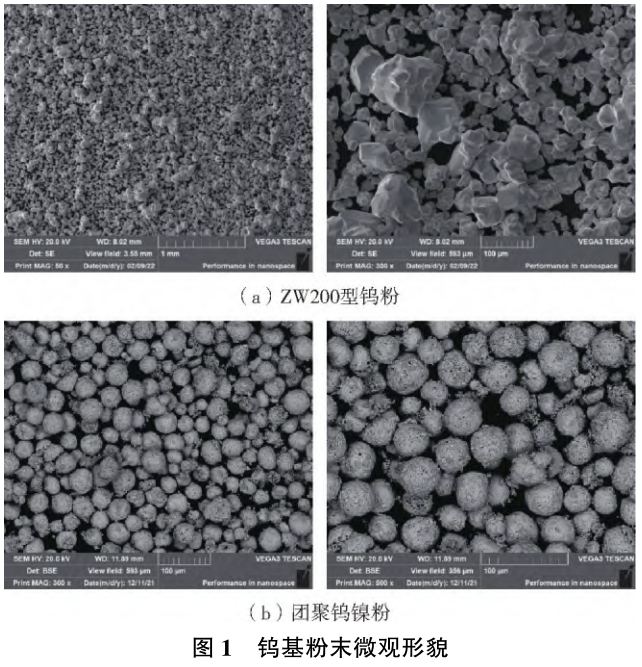
Figure 1 Microscopic Morphology of Tungsten-Based Powder
As can be seen from the figure, the tungsten powder exists in irregular shapes, with particles featuring many sharp edges, and some of the powder has agglomerated; the tungsten-nickel powder has a relatively uniform particle size distribution and good sphericity, but there are voids between the powder particles. Figure 2 shows the particle size distribution of ZW200-type tungsten powder and agglomerated tungsten-nickel powder. The average D50 particle size of the tungsten powder is 21.38 μm, with a relatively broad particle size distribution; its bulk density ranges from 2 to 8 g/cm³, its flow rate is no less than 12 s/50 g, and its oxygen content ranges from 0.1% to 0.2%; The tungsten-nickel powder has a mean D50 particle size of 39.831 μm, a narrower particle size distribution, a bulk density of 2.88 g/cm³, a flow rate of 11 s/50 g, and an oxygen content of 0.025%.
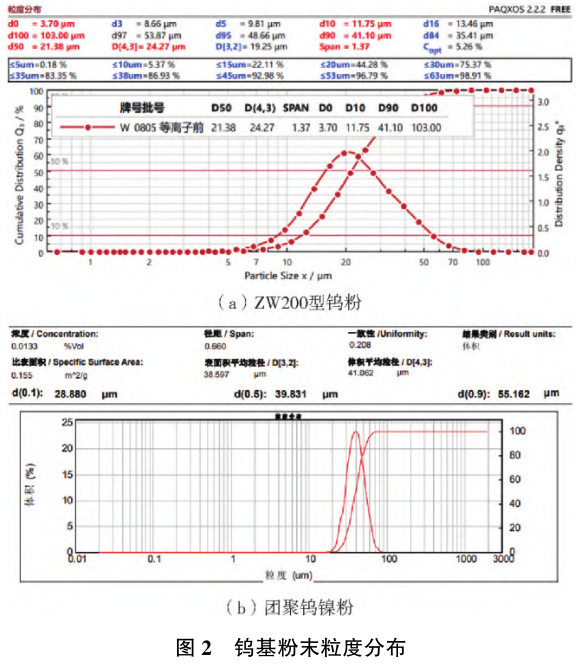
Figure 2 Particle Size Distribution of Tungsten-Based Powder
1.2 Experimental Equipment
In this experiment, the NMT-120 radio-frequency plasma spheronization system was used for powder preparation, as shown in Figure 3. This system can produce powders with particle sizes ranging from 0 to 250 μm, with a reaction chamber pressure of 2 to 15 psi and a feed speed of 0 to 20 r/min. Since tungsten powder has an irregular morphology and a single composition, the spheronization effect can be clearly characterized during the study of the plasma spheronization process. Therefore, this experiment first conducts plasma spheronization tests using tungsten powder; after obtaining the optimal process parameters, the preparation of spheronized tungsten-nickel powder will be carried out.
1.3 Experimental Characterization
The oxygen content of the powder was analyzed using a German Elter ON-900 nitrogen-oxygen analyzer; the particle size distribution of the powder was measured using a British Malvern MS3000 laser diffraction particle size analyzer; the bulk density and flowability of the powder were tested using a bulk density meter; A JSM-6701F field-emission scanning electron microscope (JEOL) was used to observe the microstructure of the powder and analyze grain morphology, particle size, and size distribution; an OXFORD-uiltm energy dispersive X-ray spectrometer was used to analyze the powder composition and its distribution uniformity.
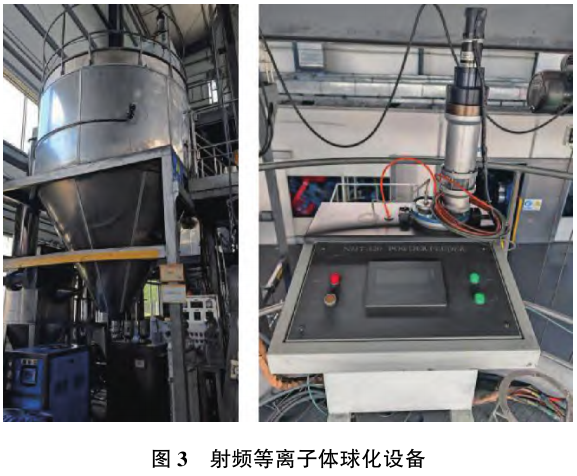
Figure 3 RF Plasma Spheronization Equipment
2 Experimental Results and Discussion
2.1 Process Study of Nitrogen Gas Flow Rate and Feed Speed
Nitrogen gas flow rate and feed speed are key process parameters for radio-frequency plasma spheroidization equipment and also play a significant role in the spheroidization of tungsten powder. Therefore, we first investigated the patterns of their influence on the spheroidization effect. Based on the equipment’s performance and relevant literature, the preliminary process parameters are shown in Table 1.
Table 1 Process Parameters for the Preparation of Tungsten Powder
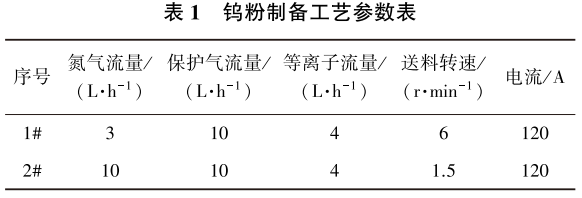
The morphology of Powder #1 is shown in Figure 4. As can be seen from the figure, only a small amount of tungsten powder was spheronized, and the spheronization effect was poor. The main reason is that, at a constant power level, the powder feed rate was high, the carrier amount was low, and the power was insufficient; consequently, the plasma power was not sufficient to melt all the tungsten powder. In Powder #2, most of the tungsten powder was spheronized, and the spheronized powder exhibited a nearly perfect spherical shape, as shown in Figure 5.
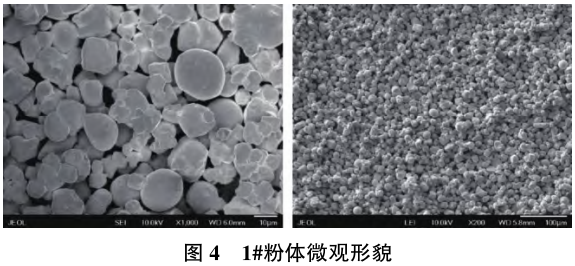
Figure 4 Microscopic Morphology of Powder No. 1
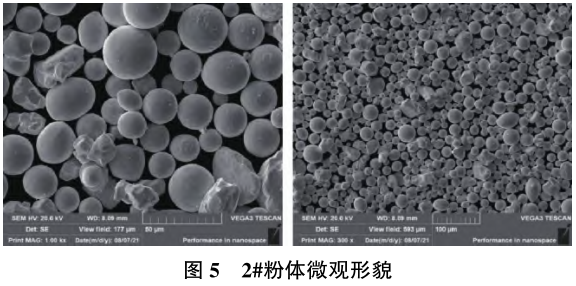
Figure 5 Microscopic Morphology of Powder No. 2
The bulk density, flow rate, and oxygen content of tungsten powders No. 1 and No. 2 were tested; the results are shown in Table 2. As shown in the table, compared to powder No. 1, powder No. 2 has a higher bulk density and better flowability, with an increase in flowability of up to 40.8%. As indicated by the changes in oxygen content, the better the spheroidization effect, the higher the oxygen content of No. 2 powder due to improved melting performance; however, both powders maintained relatively low oxygen levels.
Table 2 Properties of Tungsten Powders #1 and #2
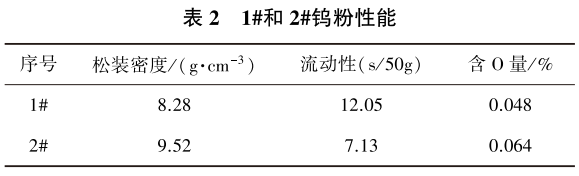
Figure 6 shows the particle size distribution of spheroidized tungsten powder No. 2. As can be seen from the figure, plasma spheroidization and classification can produce spherical tungsten powder with a uniform particle size distribution. The D50 average diameter of the powder is 21.07 Hm. Compared with the original tungsten powder, both the particle size and the size range have decreased significantly, and the spherical tungsten powder is more uniform.
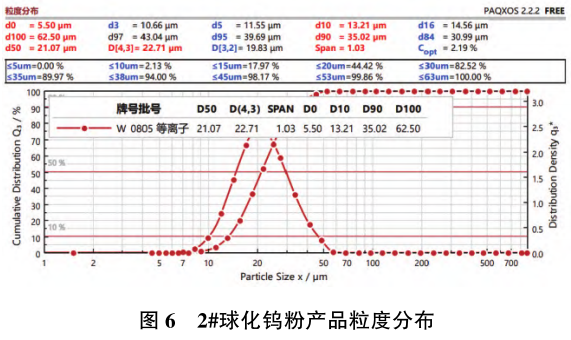
Figure 6 Particle Size Distribution of #2 Spheronized Tungsten Powder
2.2 Cross-Experimental Study
Based on the findings of the above research, it was discovered that under the same process parameters, different gas flow rates and rotational speeds result in varying powder spheroidization effects. For tungsten powders of different particle sizes, the spheroidization rate actually decreases as the feed rate increases. This is because an increased feed rate causes more powder to pass through the plasma per unit time, thereby increasing the heat required for spheroidization. However, under fixed process conditions, the heat supplied by the system is a constant value, which cannot meet the heat absorption, melting, and spheroidization requirements of the excess tungsten powder, resulting in a lower spheroidization rate. Furthermore, an increased feed rate causes the trajectories of some powder particles in the plasma to deviate from the high-temperature zone of the plasma, leading to insufficient heat absorption and ultimately a lower spheroidization rate. Therefore, under given process conditions of the system, an appropriate feed rate is a critical factor in ensuring the powder spheroidization rate.
Based on the research results in Section 2.1, the powder spheroidization effect is optimal when the nitrogen flow rate is 10 L/h and the feed speed is 1.5 r/min. Therefore, with the nitrogen flow rate, shielding gas flow rate, and plasma flow rate parameters held constant, the tungsten powder spheroidization process was studied by varying the feed speed. Furthermore, the shielding gas is a key factor for plasma ignition within the equipment and helps control the plasma temperature and atmosphere; therefore, with other process factors held constant, the effect of shielding gas flow rate on the spheroidization of tungsten powder was investigated. The specific parameters for the cross-process experiments are shown in Table 3.
Table 3 Cross-Process Experiment Parameters
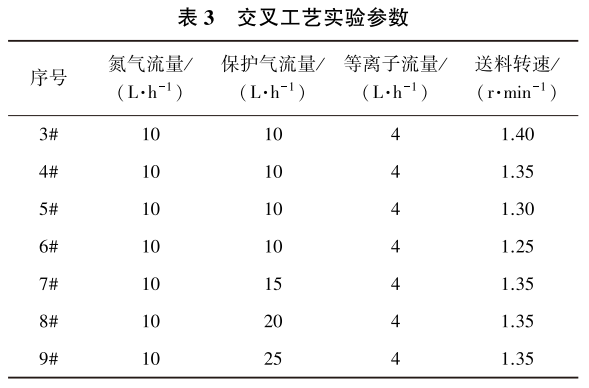
After conducting cross-spheroidization tests according to the process parameters in Table 3, the properties of each spheroidal tungsten powder sample were tested, and the results are shown in Table 4 below. As shown in the test results for Samples 3 through 6 in Table 4, the oxygen content of the tungsten powder gradually increases as the feed speed decreases. This is primarily because a lower feed speed results in a smaller amount of tungsten powder inside the equipment, while the energy supplied by the internal plasma arc remains constant. Consequently, the amount of tungsten powder undergoing heat absorption, melting, and spheroidization increases, leading to a corresponding rise in oxygen content. An increase in the feed speed also leads to an increase in the yield and rate of powder spheronization. Taking into account the values for flowability and bulk density, a feed speed of 1.35 r/min was selected as the spheronization parameter.
Table 4 Test Results for the Properties of Different Spherical Tungsten Powder Samples
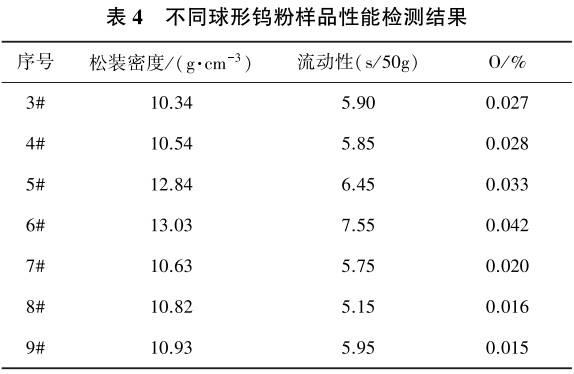
As shown by the test results for Samples 7 through 9 in Table 4, as the shielding gas flow rate increases, the flowability of the spherical tungsten powder first decreases and then increases; the oxygen content continuously decreases; and the bulk density remains within a relatively stable range. A comparison of the performance data indicates that the powder properties are optimal when the shielding gas flow rate is 20 L/h, resulting in spherical tungsten powder with low oxygen content and no excessive gas consumption. Therefore, the optimal process parameters for radio-frequency plasma spheronization of tungsten powder are: nitrogen flow rate of 10 L/h, shielding gas flow rate of 20 L/h, plasma flow rate of 4 L/h, and feed speed of 1.35 r/min.
2.3 Preparation of Spherical Tungsten-Based Powders
Figures 7 and 8 show the microstructure and compositional distribution of the spherical tungsten powder produced under the optimal process parameters, respectively. As shown in the figures, the plasma spheronization efficiency of the tungsten powder samples was high, with excellent spheronization results; all powder particles were spheronized, although a small number exhibited surface pits. Both individual tungsten particles and the overall powder in the spherical tungsten powder were dominated by the element W, with a content of 100 wt%, indicating that no oxidation occurred during the spheronization process and that the composition distribution was uniform. Using synergistic classification technology, spherical powders with a more concentrated particle size distribution were obtained; the particle size distribution is shown in Figure 9. As shown in the figure, the D50 of the spherical tungsten powder is 37.83 μm, which is slightly larger than that of the No. 2 powder sample, but the particle size spread is significantly reduced, and the particle size distribution is more concentrated. This indicates that, under optimal process parameters, the quality of the spherical tungsten powder is more stable and better suited for 3D printing.
Under the same process conditions, spherical tungsten-nickel powder was prepared using plasma spheronization, and its morphology is shown in Figure 10. As shown in the figure, the spheronized tungsten-nickel powder prepared initially exhibited good sphericity but was of uneven size and contained fine particles. To ensure the formability of the spheronized tungsten-nickel powder, a small amount of Fe was added during the plasma spheronization process to ensure overall powder particle size uniformity.
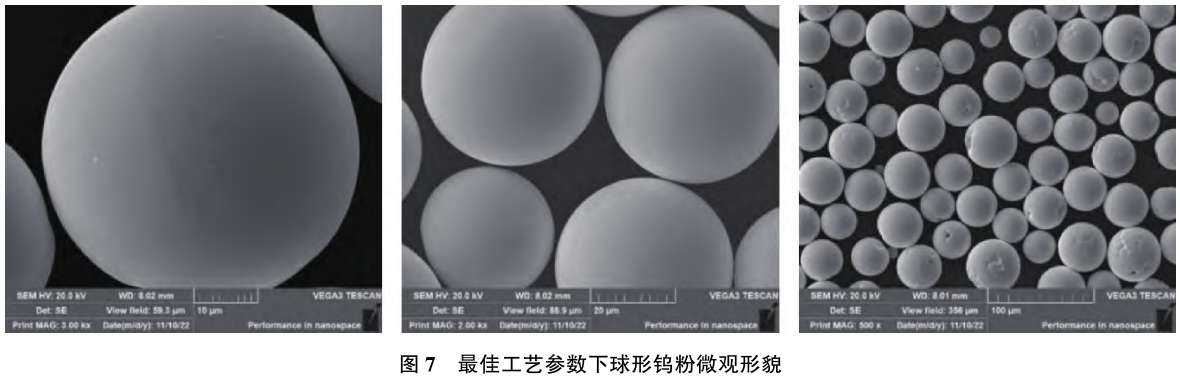
Figure 7 Microstructure of spherical tungsten powder under optimal process parameters
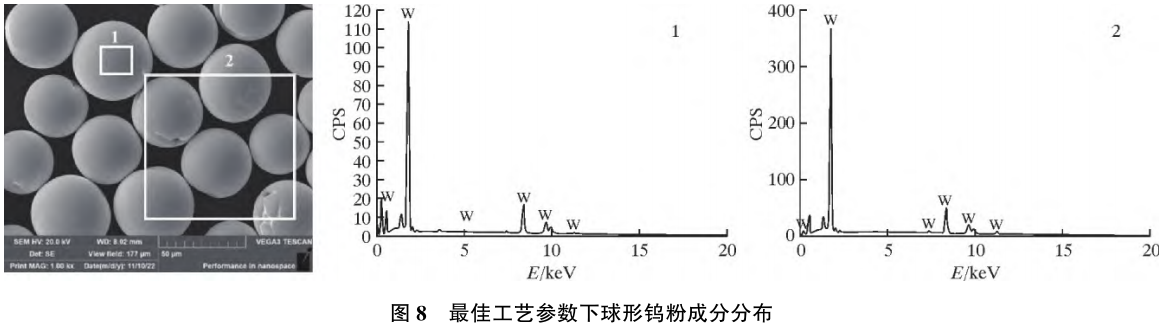
Figure 8 Composition Distribution of Spherical Tungsten Powder Under Optimal Process Parameters
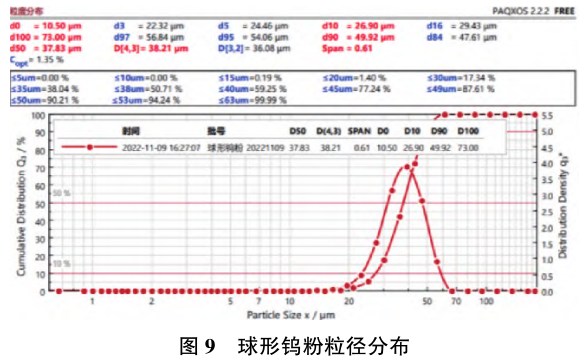
Figure 9 Particle Size Distribution of Spherical Tungsten Powder
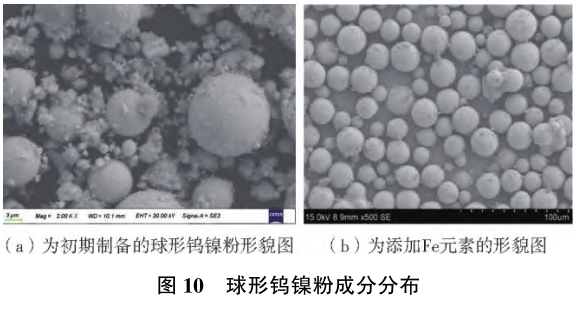
Figure 10 Composition Distribution of Spherical Tungsten-Nickel Powder
The compositional analysis of the spherical tungsten-nickel powder after the addition of Fe is shown in Figure 11. As shown in the figure, the spheroidized tungsten-nickel powder has an overall uniform composition, with W and Ni as the main components, at 88–90 wt% and 7–9 wt%, respectively. Iron is added as a trace element, with a content of less than 2 wt%; however, it serves as a binder during the spheroidization stage, ensuring the particle size uniformity of the spheroidized tungsten-nickel powder.
2.4 3D Printing Tests
Due to the extremely rapid melting and cooling processes involved in 3D printing, and given that spherical tungsten powder has high hardness and a high melting point, shielding structures produced via 3D printing are prone to cracking; therefore, spherical tungsten-nickel powder was selected as the printing material. A Truprint 3000 machine was used to perform selective laser melting (SLM, 3D printing) of spherical tungsten-nickel powder. The printing process parameters were as follows: laser power 400 W, scanning speed 500 mm/s, and layer height 0.03 mm. Figure 12 shows the metallographic structure of the shielding body specimen 3D-printed from spherical tungsten-nickel powder. As shown in the figure, under these 3D printing parameters, a dense, crack-free tungsten-nickel alloy shielding body can be obtained. Metallographic observation and comparison reveal a porosity of less than 1% and a relative density of >99%.
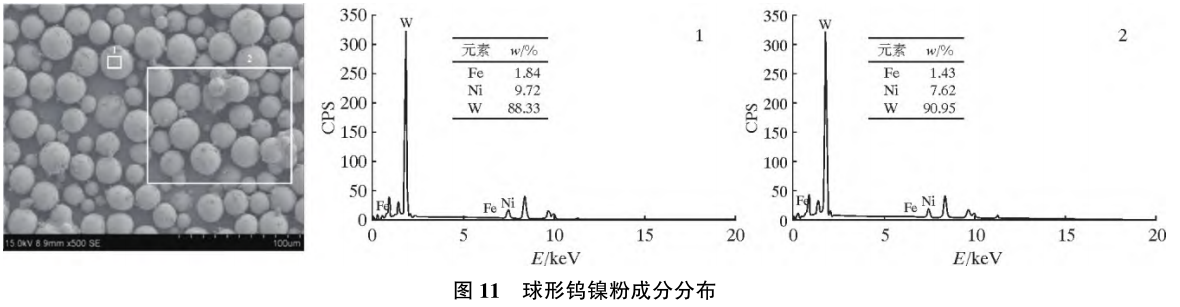
Figure 11 Composition Distribution of Spherical Tungsten-Nickel Powder
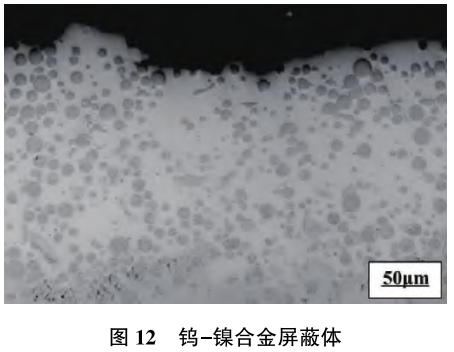
Figure 12 Tungsten-Nickel Alloy Shielding Body
3. Conclusions
(1) Radio-frequency plasma spheronization technology can be used to produce spherical tungsten-based powders;
(2) Through a cross-comparison of different process parameters, the optimal process parameters for radio-frequency plasma spheronization of tungsten-based powders were determined to be: nitrogen flow rate of 10 L/h, shielding gas flow rate of 20 L/h, plasma flow rate of 4 L/h, and feed speed of 1.35 r/min;
(3) The spherical tungsten-based powders prepared using the optimal process parameters exhibit a narrow particle size distribution, good bulk density, flowability, and low oxygen content, with uniform composition, thereby meeting the requirements of 3D printing technology;
(4) Using spherical tungsten-nickel powder for 3D printing results in the fabrication of tungsten-nickel alloy shielding bodies that are crack-free, have a porosity of less than 1%, and a relative density greater than 99%.
References: Experimental Research; Study on the Preparation Process of Tungsten-Based Shielding Powder Materials for 3D Printing; Zhong Zhiqiang, Wang Shaoyi, Tang Yanyuan
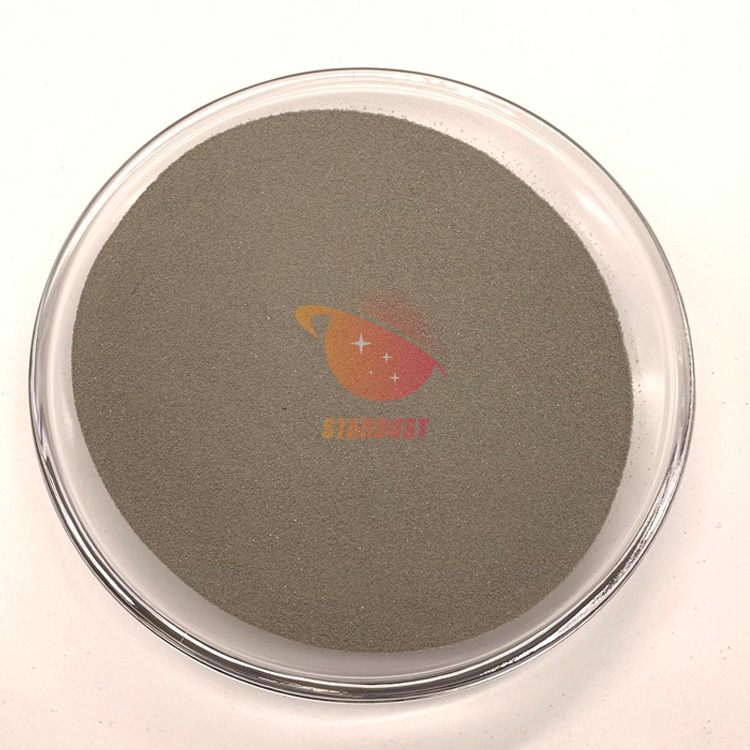
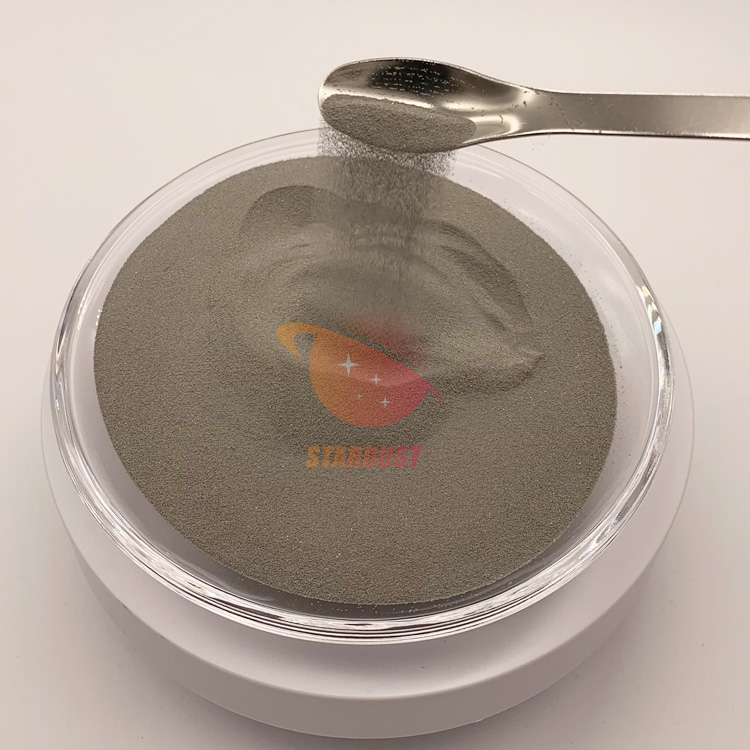
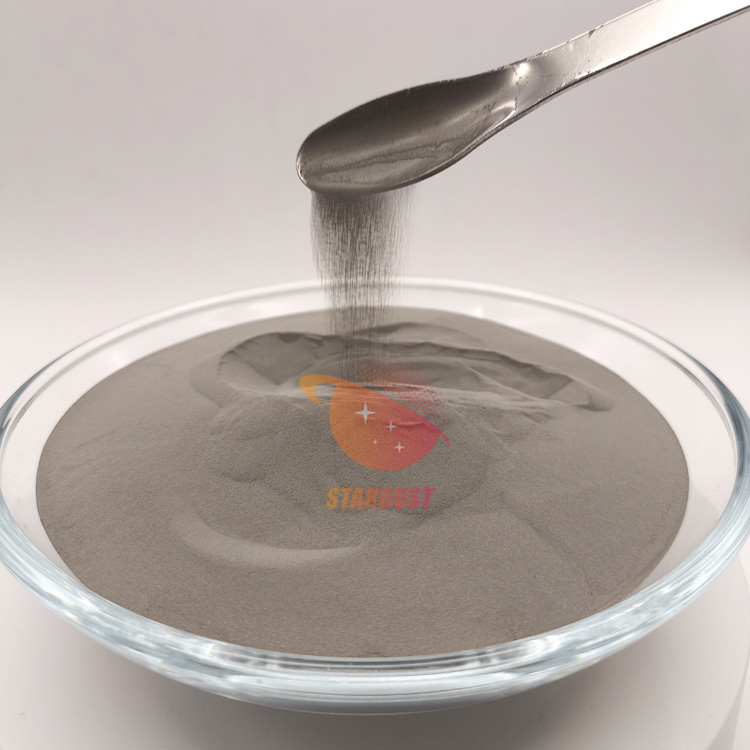
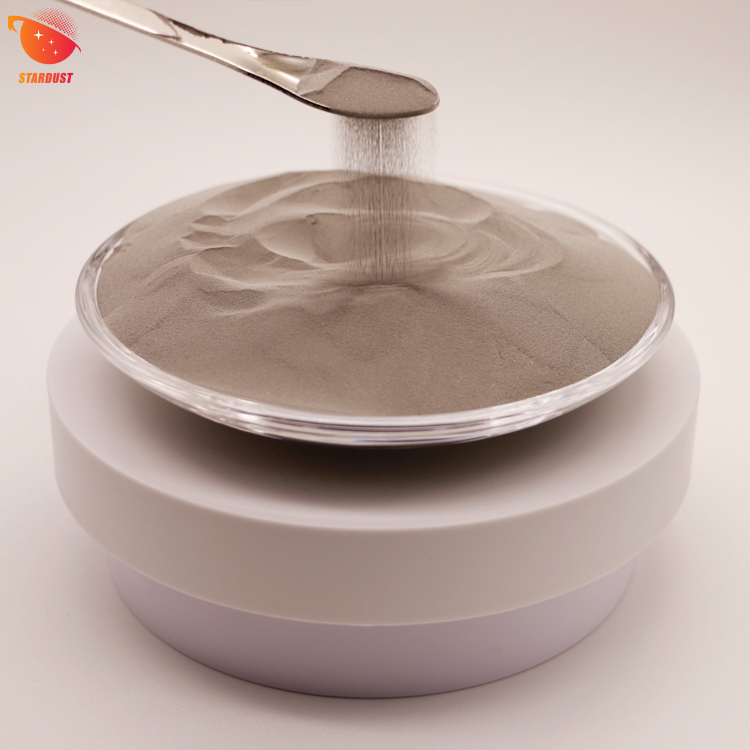
High-end powder materials are a crucial foundation for the development of additive manufacturing, aerospace, healthcare, and other fields. Stardust Technology focuses on radio-frequency plasma spheronization, conducting practical research into processes and equipment for refractory metal powders to provide reliable powder solutions for various industries. Radio-frequency plasma spheronization utilizes an ultra-high-temperature plasma environment to melt irregularly shaped raw powder, which is then cooled to achieve spheronization, densification, and alloying. This process addresses industry pain points associated with traditional powder production—such as poor particle shape, impurity introduction, and difficulties in particle size control—by establishing its own unique process characteristics. It is compatible with a wide range of raw materials while maintaining cost-effectiveness for practical applications. The entire process flow enables closed-loop control from raw powder to spheronized powder, facilitating stable production management and minimizing the impact of batch-to-batch variations. The equipment is capable of spheronizing high-melting-point and refractory materials and can be customized to accommodate different particle size ranges. The resulting powder exhibits minimal internal defects, with the proportion of hollow and satellite particles effectively controlled. It demonstrates excellent flowability and is suitable for additive manufacturing applications. The process involves no electrode contact with the material, reducing the introduction of external impurities. The powder’s oxygen content is excellently controlled, meeting the purity requirements of applications in fields such as medical and aerospace. Based on this process system, the company can produce spherical powders of rare refractory metals such as tungsten, molybdenum, tantalum, and niobium. To address the diverse needs of different customers, we conduct process optimization based on actual operating conditions, respect the objective laws of material processing, acknowledge the inherent limitations of the process, and adopt a pragmatic approach to meet diverse high-end application requirements, thereby facilitating the practical implementation of high-end powder materials. For more product information, please contact our professional sales manager, Cathie Zheng, at +86 13318326187.






 IPv6 network supported